


SUSTAINABILITY
Monoacylglycerols: A Comprehensive Analysis of Applications Across Food, Personal Care & Cosmetics, and the Plastics Industry
Release time:
2025-07-28 10:25
Source:
Monoglyceride, or monoglyceride of fatty acids, typically appears as an oily, fatty, or waxy substance. It is usually pale yellow or white in color and may have a characteristic fatty odor or be odorless; these properties are closely related to the size and degree of saturation of the fatty acid chains.
Monoglycerides are insoluble in water and glycerol, yet they can form stable hydrated dispersions in aqueous media. Their HLB (hydrophilic–lipophilic balance) typically ranges from 2 to 3, and this value can be tuned by varying the carbon chain length and degree of saturation of the constituent fatty acids. From a molecular‑structural perspective, monoglycerides possess a lipophilic long alkyl chain and two hydrophilic hydroxyl groups; this “dual‑affinity” arrangement makes them highly effective nonionic surfactants.

Unveiling the Core Role
The reason why monoglycerides can perform so effectively across a wide range of applications lies in their unique molecular structure. This structure endows them with a remarkable property—emulsifying capability. Simply put, it enables oil and water, traditionally “natural enemies,” to coexist harmoniously. In food processing, oil–water separation is a common issue; for example, homemade salad dressings will quickly separate into distinct layers if they lack an appropriate emulsifier. By contrast, the addition of monoglycerides reduces the interfacial tension between oil and water, allowing them to blend uniformly and form a stable emulsion. This prevents problems such as oil–water separation, layering, and sedimentation in foods and beverages, thereby enhancing product quality and extending shelf life.
In addition to its powerful emulsifying properties, monoglycerides possess other practical benefits. In the food industry, they form complexes with starch, effectively preventing post‑cooling recrystallization—commonly known as starch retrogradation. Take bread, for example: freshly baked, it’s soft and delicious, but after a while it hardens and crumbles—this is the result of starch aging. By contrast, bread fortified with monoglycerides stays fresh and tender for much longer, allowing us to enjoy its flavor at any time. Monoglycerides also enhance fat crystallization by orienting themselves on the fat surface, thereby controlling and stabilizing crystal formation. This capability is especially valuable in margarines, shortening, and other fat‑based products, where it improves plasticity and spreadability, prevents oil separation and layering, and ensures that buttery spreads are smoother and more uniform, while shortening delivers crispier, more distinct layers in baked goods.
Food sector
In baked goods, it serves as both a “freshness‑preserving guardian” and a “texture‑enhancing master.” When added to bread at 0.3%–0.8% of the flour weight, monoglycerides accelerate fermentation, increase loaf volume, and produce a softer, more porous crumb. They also extend shelf life, keeping bread soft for longer and effectively preventing staling and crumbling. In cake making, incorporating monoglycerides at 3%–10% of the fat content enhances egg‑white foaming, aids in whipping, and yields cakes with a fine texture and greater volume.
In the cold‑drink industry, monoglycerides are the unsung heroes behind ice cream’s velvety texture. As one of the most ideal emulsifiers and stabilizers for producing high‑quality ice cream, they enhance fat dispersion, resulting in finer, more uniform fat particles; they also promote interactions between fats and proteins, inhibit and control the formation of large ice crystals, and lend the product a smooth, creamy texture while improving its shape retention and shelf life—yielding an even better melt‑in‑your‑mouth experience.
Monoglycerides also play an important role in chocolate and confectionery. Adding 0.2%–0.5% monoglyceride during chocolate production helps prevent sugar crystallization and oil–water separation, enhances the chocolate’s smooth texture, inhibits fat bloom, and improves its crispness and shape retention. In the manufacture of milk candies, toffees, and other confections, monoglycerides prevent oil exudation and phase separation, reduce stickiness to packaging and teeth, enhance product shape retention and gloss, and extend shelf life.

Daily Chemicals and Cosmetics
In skincare products such as creams and lotions, it serves as an emulsifier, enabling the oil and water phases to blend uniformly and form a stable emulsion. This results in a smoother, more refined texture that is easy for the skin to absorb. Additionally, monoglycerides provide moisturizing benefits by creating a protective film on the skin’s surface, helping to prevent moisture loss and maintain the skin’s hydration and radiance.
In shampoos and conditioners, monoglycerides can serve as thickeners, helping to adjust the product’s viscosity so that it spreads more evenly along the hair. They also soften the hair fibers and improve combability, leaving the hair smoother and shinier.

Industrial Stage
In the plastics industry, it is primarily used as a release agent, plasticizer, and antistatic agent. As a release agent, monoglycerides reduce friction between the molded plastic part and the mold, facilitating easier demolding and enhancing both production efficiency and product quality. As a plasticizer, they increase the flexibility and moldability of plastics, improving their processability. As an antistatic agent, monoglycerides help minimize static charge buildup on the surface of plastic parts, preventing dust and contaminants from adhering and thereby improving surface smoothness and aesthetic appeal.
In the production of agricultural greenhouse films, monoglycerides serve as the primary ingredient in anti‑drip agents. They reduce the surface tension of the film, enabling condensation droplets to quickly slide off, thereby preventing refraction and scattering of sunlight and enhancing the film’s light transmittance. This provides crops with improved lighting conditions, promoting their growth and development.
Monoglycerides can also serve as textile printing and dyeing auxiliaries, used in fiber finishing. They reduce friction between fibers, inhibit static buildup, prevent fiber breakage, and enhance the quality and performance of textiles, making fabrics softer, smoother, and more comfortable to wear.

Global and Domestic Market Analysis of Monoacylglycerols
As demand for monoglycerides continues to grow across various industries, the market size is steadily expanding. According to the “2024–2029 China Monoglyceride Industry Market Analysis and Development Prospects Forecast Report,” the global monoglyceride market was valued at approximately RMB 210 million in 2021 and is projected to reach RMB 300 million by 2028, with a compound annual growth rate (CAGR) of 4.8% from 2022 to 2028. Meanwhile, QYResearch estimates that the global distilled monoglyceride market stood at about USD 751 million in 2024 and is expected to grow to USD 873 million by 2031, reflecting a CAGR of 2.2% over the 2025–2031 period.
China is the world’s largest market for distilled monoglycerides, accounting for approximately 36% of global market share. This is largely driven by China’s massive population, its rapidly growing economy, and the expanding food, personal care, cosmetics, and industrial sectors. In recent years, as consumer health awareness has risen and the food and cosmetics industries have continued to develop, demand for monoglycerides in China has remained on a steady upward trajectory. For instance, the Chinese market for glyceryl monolaurate (GML) has maintained robust growth, particularly in the cosmetics sector, where GML—owing to its unique emulsifying, stabilizing, and solubilizing properties—has become an indispensable ingredient. Meanwhile, the application of GML in the food industry is also steadily expanding, providing fresh impetus for market growth.
Forecasts indicate that, between 2025 and 2030, the Chinese distilled monoglyceride industry is expected to experience steady growth, with the overall market size projected to surpass RMB 10 billion, reaching approximately RMB 12 billion.

Jiadele has introduced advanced foreign equipment and technologies, establishing a four‑stage molecular distillation purification process that has raised the purity of mono‑fatty acid glycerides from 99.2% to over 99.8%. The company has independently developed corrugated‑plate distillation units, heat‑exchange systems, vacuum systems, and online monitoring systems, and has built the world’s largest single‑line production facility for high‑purity fatty acid glycerides, with an annual capacity of 100,000 tons. Equipped with an industrial Internet platform, this facility enables large‑scale, digital, networked, collaborative, intelligent, and green manufacturing.
Jiadele has been dedicated to the development of ester-based functional materials for 20 years, having launched more than ten specialized fatty acid ester product lines for the food and chemical industries. Among these, its high-purity mono‑fatty acid glycerides have addressed the domestic market’s shortage of premium ester additives, effectively replacing comparable high‑end imported products. If you have any needs for mono‑glycerides—whether in the food, personal care, pharmaceutical, cosmetic, or other industrial sectors—please feel free to contact us!
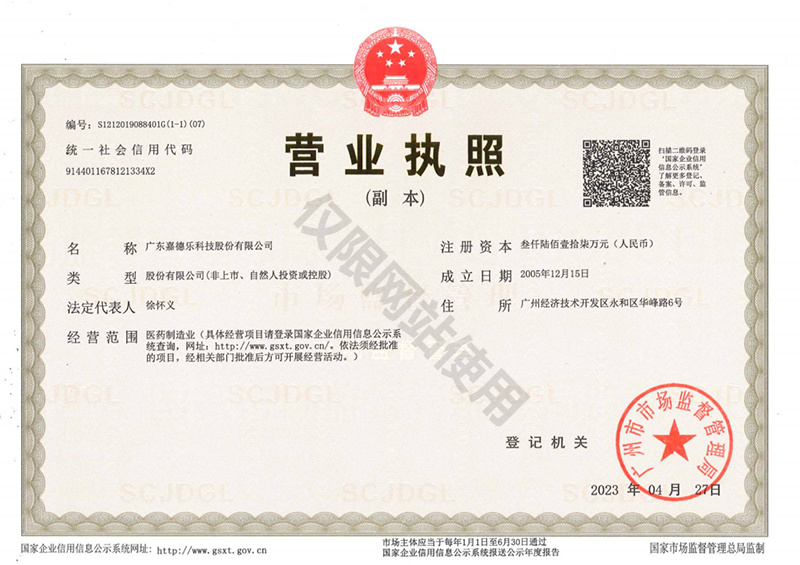
Monoglyceride–Polyglycerol Fatty Acid Ester Manufacturer – Guangdong Jiadele Technology Co., Ltd.
Related News

Tel: +86-20-3848 0078
Fax: +86-20-3848 0779
Email: info@gzcardlo.cn
Office: 7th Floor, North Tower, Ruihua Building, 267 Wushan Road, Tianhe District, Guangzhou City, Guangdong Province, China.
Factory: No.6 Huafeng Road, Yonghe District, Economic and Technological Development Zone, Guangzhou City, Guangdong Province, China.
©2023 Guangdong Cardlo Biotechnology Co., Ltd. All Rights Reserved