


SUSTAINABILITY
Sodium Stearoyl Lactylate (SSL): Production Process and Applications
Release time:
2025-08-01 17:05
Source:
Sodium stearoyl lactylates, commonly abbreviated as SSL, has the chemical formula C21H41O3Na and a relative molecular mass of approximately 364.54. Structurally, it consists of a stearic acid moiety and a lactic acid moiety linked by chemical bonds, forming a salt with sodium ions. This distinctive molecular architecture imparts to sodium stearoyl lactylates unique chemical properties and functional characteristics.
Sodium Stearoyl Lactylate Manufacturing Process
In industrial production, there are two common methods for preparing sodium stearoyl lactylate. One involves concentrating lactic acid under reduced pressure at 100–110°C, followed by heating it to 190–200°C in an inert carbon dioxide atmosphere to react with stearic acid and sodium carbonate; after the reaction is complete, cooling yields sodium stearoyl lactylate. The other method entails first neutralizing lactic acid to its sodium salt, then esterifying it with stearic acid to obtain the desired product. Although these two approaches differ, both rely on chemical reactions among stearic acid, lactic acid, and sodium to precisely construct the molecular structure of sodium stearoyl lactylate.

Properties of Sodium Stearoyl Lactylate
From an appearance standpoint, sodium stearoyl lactylate typically presents as a brittle white to pale yellow solid or powder, a form that facilitates its easy blending with other ingredients across various applications. Upon closer inspection, it emits a subtle caramel-like aroma; this distinctive scent does not interfere with the flavor of the final product and, in certain food applications, can even lend a unique nuance.
Sodium stearoyl lactylate exhibits slight hygroscopicity, meaning it can absorb moisture from the air in humid environments. Therefore, during storage, it is important to keep it dry to prevent moisture absorption from compromising its performance and quality.
In terms of solubility, it is insoluble in cold water but disperses readily in hot water, forming a uniform dispersion. Additionally, sodium stearoyl lactylate is soluble in ethanol and in hot fats and oils; this solvent‑dependent solubility facilitates its application in industries such as food and cosmetics.
For example, in food processing, it can mix thoroughly with oils and fats, exerting its emulsifying effect; in cosmetic formulation, it dissolves in specific solvents, thereby stabilizing and thickening emulsion systems. Furthermore, sodium stearoyl lactylate is an anionic emulsifier with a hydrophilic–lipophilic balance (HLB) value of approximately 5.1. The HLB value reflects the combined influence of the emulsifier’s hydrophilic and lipophilic groups on its performance; for sodium stearoyl lactylate, this HLB determines its ability to effectively reduce interfacial tension at the oil–water interface during emulsification, enabling uniform dispersion of oil droplets within the aqueous phase and forming a stable emulsion system.

Quality specifications for sodium stearoyl lactylate

The core functions of sodium stearoyl lactylate
Powerful emulsification capability
The molecular structure of sodium stearoyl lactylate contains both hydrophilic and lipophilic groups. This unique structural feature enables it to function as an emulsifier in water–oil systems. When sodium stearoyl lactylate is added to a water–oil mixture, its lipophilic groups interact with oil molecules, penetrating the interior of oil droplets, while its hydrophilic groups associate with water molecules, forming a protective layer around the droplets. In this way, the inherently immiscible oil and water are brought together by sodium stearoyl lactylate, resulting in a uniform blend and a stable emulsion.
In the food industry, many products rely on the emulsifying properties of sodium stearoyl lactylate. For example, when making cakes, sodium stearoyl lactylate is added to ensure that fats are evenly dispersed throughout the batter, resulting in a fine texture and a tender, fluffy mouthfeel. It enables fats to be uniformly distributed as tiny droplets within the aqueous phase of the batter, preventing fat aggregation and separation, thereby guaranteeing the cake’s quality and taste.
In the production of chocolate, sodium stearoyl lactylate also plays a crucial role. Chocolate contains fat components such as cocoa butter; by adding sodium stearoyl lactylate, these fats can be more effectively blended with other ingredients, resulting in a more uniform and refined texture and a smoother, silkier mouthfeel.

In the dairy industry, sodium stearoyl lactylate also plays a crucial role. In yogurt production, it helps maintain product stability, prevents whey separation, and contributes to a thicker, smoother texture with a richer, more mellow mouthfeel. During cheese-making, sodium stearoyl lactylate enhances emulsification, resulting in a more uniform texture that is easier to spread and process.
In the cosmetics industry, sodium stearoyl lactylate plays a key role as both an emulsifier and a thickener. Take lotions as an example: they are complex systems composed of oil and water phases, and sodium stearoyl lactylate effectively emulsifies these two phases, forming a stable emulsion structure. As a result, the lotion spreads more evenly upon application, is easily absorbed by the skin, and maintains excellent stability, preventing separation. For facial creams, its thickening effect imparts an appropriate consistency—neither too thin to apply nor too thick to compromise usability—while also helping the cream retain a smooth, fine texture, thereby enhancing the skin’s absorption of its active ingredients.

Outstanding筋-enhancing effect
For those who love wheat-based foods, the gluten strength of the dough directly affects their texture and quality. Sodium stearoyl lactylate can significantly enhance dough elasticity: its hydrophilic groups bind to gliadin in wheat gluten, while its hydrophobic groups associate with glutenin, forming a gluten–protein complex. This complex refines and strengthens the gluten network, reducing strand breakage. As a result, cooked noodles are more resistant to soaking and boiling, offering a chewier bite, and they retain their texture and shape even after standing for some time.
When baking bread, adding sodium stearoyl lactylate significantly enhances the dough’s elasticity and tenacity. During kneading, the dough feels noticeably chewier and less prone to tearing. The resulting loaf is larger in volume, with a softer, more porous crumb and a delightfully springy texture.

Outstanding preservation and anti-aging capabilities
I’m sure many of you have experienced this: after being left out for a while, bread becomes dry and hard, losing its original soft, fluffy texture. This happens because food undergoes staling during storage, and sodium stearoyl lactylate can effectively slow down this process. It achieves its preservation and anti‑staling effects primarily by interacting with amylose. The molecules of sodium stearoyl lactylate can insert themselves into the helical structure of amylose, forming stable complexes. These complexes inhibit the rearrangement and crystallization of starch molecules, thereby delaying starch aging.

Other potential application features
In addition to the food and cosmetics industries, sodium stearoyl lactylate also holds certain application potential in the pharmaceutical sector. In drug formulations, it can serve as an emulsifier or thickener, used to prepare emulsions, suspensions, and other dosage forms. For instance, in some oral emulsions, sodium stearoyl lactylate helps ensure the uniform dispersion of oil‑soluble drug ingredients in the aqueous phase, thereby enhancing the formulation’s stability and bioavailability.
In the plastics industry, sodium stearoyl lactylate can be used as both a lubricant and a mold release agent. During plastic processing, its addition reduces the viscosity of the molten polymer, facilitating easier molding, while also decreasing friction between the molded part and the mold, thereby promoting demolding and enhancing both production efficiency and product quality.
In addition, in industries such as textiles and leather, sodium stearoyl lactylate may also be used as an additive—such as a softening agent or lubricant—to help enhance the performance of products. Although its applications in these sectors remain relatively limited at present, ongoing technological advancements and deeper research are expected to further uncover and develop its latent potential in an expanding range of fields.

Global Market Trends
Globally, the sodium stearoyl lactylate market is experiencing sustained growth. According to relevant market research reports, the global market size reached RMB 3.978 billion in 2023 and is projected to rise to RMB 9.194 billion by 2029, with an estimated compound annual growth rate of 15.19% over the forecast period.
From a regional perspective, North America, Europe, and the Asia-Pacific region are the primary markets for sodium stearoyl lactylate. In North America and Europe, the well-developed food and cosmetics industries have sustained strong and sizable demand for this ingredient. Meanwhile, in the Asia-Pacific region, rapid economic growth and rising consumer purchasing power have fueled swift expansion of the food and cosmetics markets, making it a key driver of market growth for sodium stearoyl lactylate. Notably, populous countries such as China and India boast substantial market potential, with particularly robust demand growth for this additive.
Current Status and Prospects of the Domestic Market
The domestic sodium stearoyl lactylate market has also demonstrated strong growth momentum. In 2023, the market size in China reached RMB 779 million.
With the continued growth of domestic industries such as food and cosmetics, market demand for sodium stearoyl lactylate is expected to expand further. In the food sector, the sustained boom in the baking market, coupled with innovative developments across niche segments like dairy products, meat products, and ready‑to‑eat meals, will create additional market opportunities for sodium stearoyl lactylate. Meanwhile, in the cosmetics industry, the rapid rise of China’s beauty market and consumers’ growing preference for high‑end, personalized products will drive the expanding application of sodium stearoyl lactylate in this field. Looking ahead, as these industries evolve, the domestic market for sodium stearoyl lactylate is projected to continue expanding, offering a highly promising outlook.
Looking ahead, driven by technological innovation, the production process of sodium stearoyl lactylate will continue to be optimized, with further improvements in product quality and performance. Meanwhile, as public awareness of health and environmental sustainability grows, the application of sodium stearoyl lactylate in green, natural, and functional products will become a key focus of research and development.

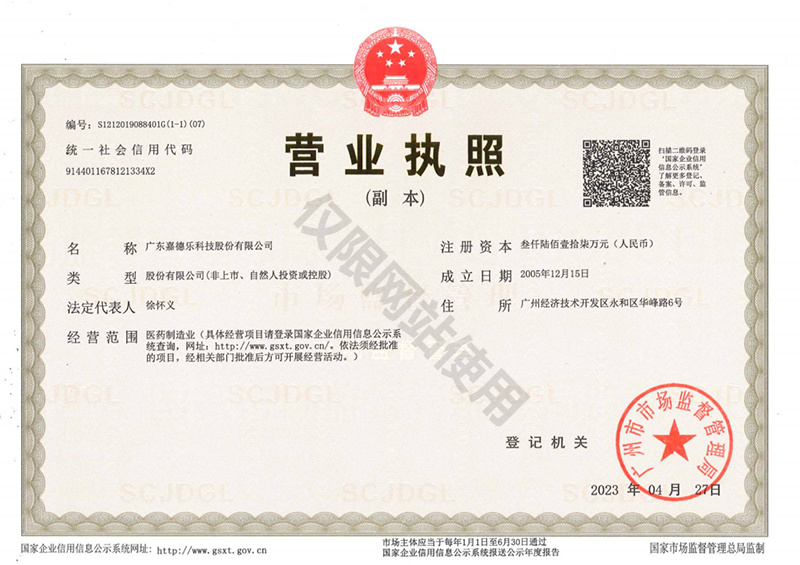
Jiadele is committed to providing customers with high‑quality sodium stearoyl lactylate. Leveraging advanced manufacturing technologies and a rigorous quality‑control system, Jiadele’s products have earned an excellent reputation in both domestic and international markets, offering customers high‑performance, safe, and reliable solutions that meet the diverse needs of the market. At the same time, Jiadele will actively expand its market presence, strengthen collaboration with domestic and overseas clients, and enable sodium stearoyl lactylate to demonstrate its unique value across an even broader range of applications, thereby jointly driving the industry’s continued growth.
Monoglyceride–Polyglycerol Fatty Acid Ester Manufacturer – Guangdong Jiadale Technology Co., Ltd.
Next Page
Related News

Tel: +86-20-3848 0078
Fax: +86-20-3848 0779
Email: info@gzcardlo.cn
Office: 7th Floor, North Tower, Ruihua Building, 267 Wushan Road, Tianhe District, Guangzhou City, Guangdong Province, China.
Factory: No.6 Huafeng Road, Yonghe District, Economic and Technological Development Zone, Guangzhou City, Guangdong Province, China.
©2023 Guangdong Cardlo Biotechnology Co., Ltd. All Rights Reserved